
Planning the Tuolumne → Half Dome loop
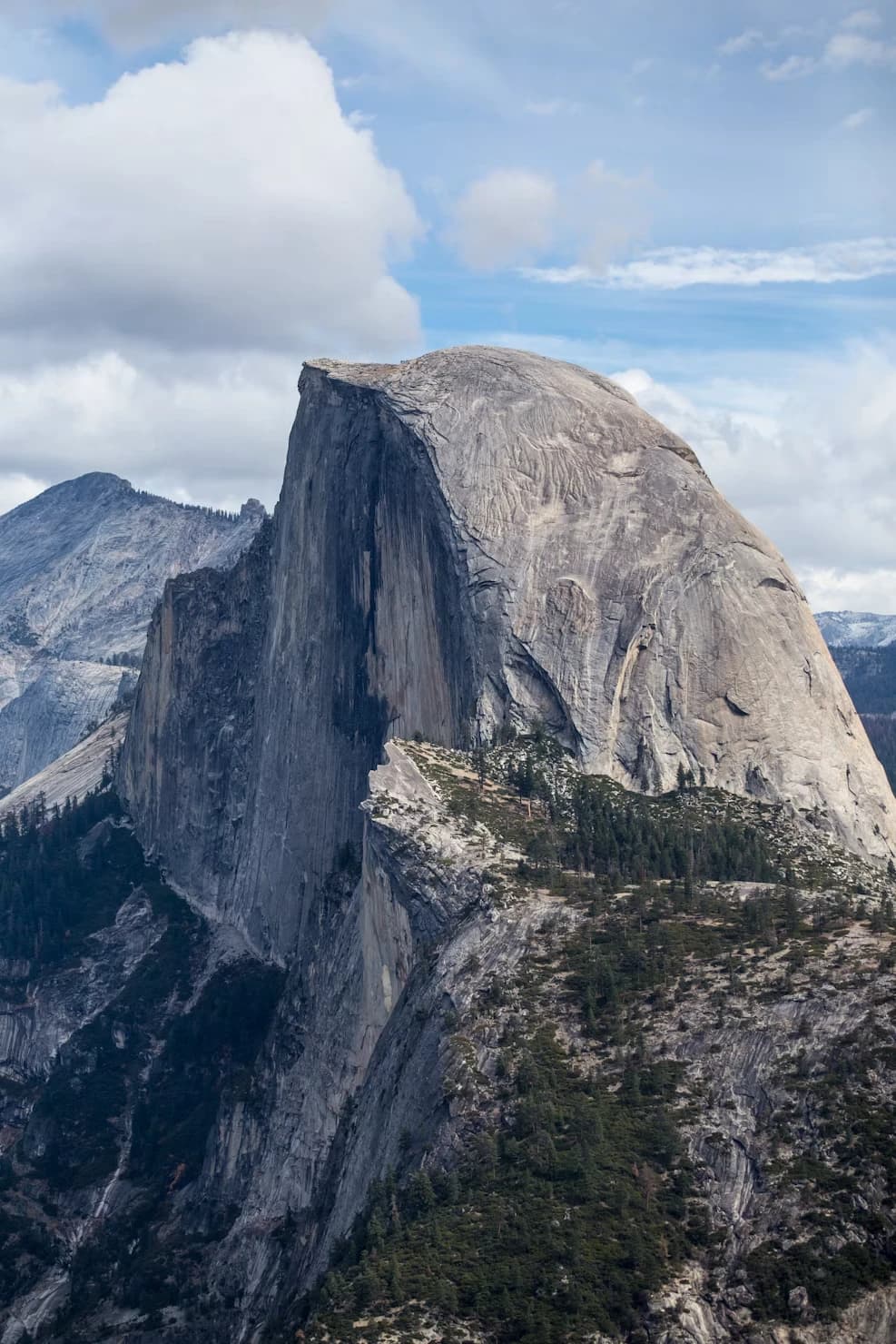
Six days, 52 miles, two permit systems, and one division that ended up saving the trip. This is the full planning file for a September loop out of Tuolumne Meadows, written up as a worked example of the method.
The skeleton: cairns first
The trip starts as eight cairns, before any line gets drawn: Tuolumne Meadows trailhead, Cathedral Lakes camp, Sunrise Lakes, the Half Dome cables, Little Yosemite Valley, Merced Lake, Vogelsang, and out via Lyell Canyon. Camps and permit gates only. Every one gets coordinates the same evening — the point of locating them early is that weather, ground elevation, and honest leg distances all start flowing while the plan is still cheap to change.
Two permit systems, one calendar
This loop is permit-gated twice. The Yosemite wilderness permit for the Cathedral Lakes trailhead runs on a rolling lottery 24 weeks out — for a September 12 start, that window is late March. The Half Dome cables are a separate preseason lottery, March 1–31, plus a daily lottery two days ahead as a fallback. Both go on their cairns in Divide, and the permit panel now reads as a to-do list with dates: two applications, both in March, five days apart.
The division that mattered
The cables are a lottery, which means day 3 is a coin flip you find out about in April. So the day-3 leg gets a division. Condition: “Cables permit drawn?” Plan A: Sunrise Lakes → cables → Little Yosemite Valley. Plan B: Sunrise Lakes → Clouds Rest → Little Yosemite Valley — same start, same camp, and honestly the better summit view. Both branches fully built: Clouds Rest got its own cairn, mileage, and water note.
We lost the preseason lottery. Nobody re-planned anything in April — the condition resolved, Plan B's cairns moved to the trunk, and the trip was exactly as finished as it had been the day before. The group later voted Clouds Rest the best day of the six. That's what a real Plan B buys: losing the lottery cost us nothing but the cables.
Budgets and the shape of the days
Every leg budgeted at group pace — the slowest member, loaded, at altitude. Day 2 penciled out at 6.5 mi and +1,200 ft: four hours, generous. The elevation profile flagged the original day 4 as the saw blade — 14 miles with two climbs — so Merced Lake became a night, splitting it into two humane days. September afternoons in the high country build thunderstorms, so both big-climb days start at first light, and the division condition on the exposed morning was written as a number: under 30% by 8am, or hold.
The share link went to the group in May. Six people, zero logistics questions, one persistent complaint about the 5am starts. The plan absorbed the lottery loss, a smoky day, and a swapped campsite without a single evening of re-planning. That's the whole method working as intended.